
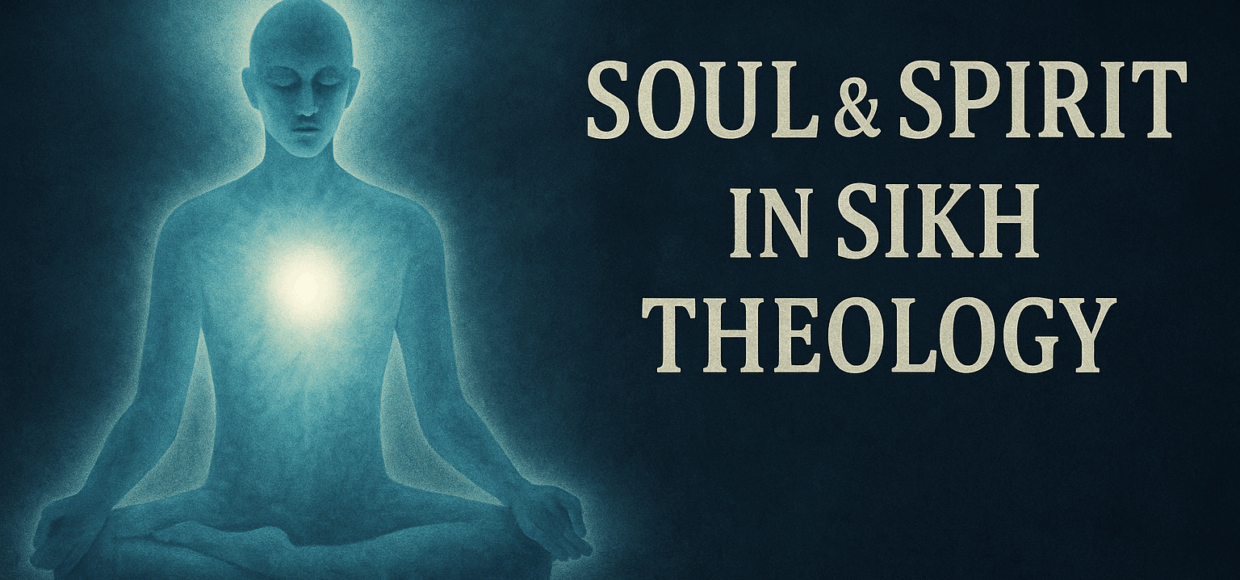
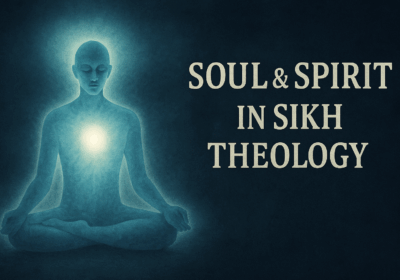
In Sikh theology, especially as reflected in the Adi Granth (AG), the concepts of soul (atma)
and spirit (surat, chetan, jot, etc.) are not systematically defined in the way they are in
Christian theology. However, a few general themes and distinctions can be drawn:
- The Soul (Atma) in Sikhism
The soul is eternal (amar atma) and considered a spark or emanation (jot) of the Divine.
It is believed to be of the same essence as God, not distinct in substance:
“Atma Parmatma ek hai.”
(“The soul and God are one.”) — AG p. 1158
The goal of the soul is to merge back into the Ultimate Reality (Waheguru) from which
it supposedly originated—similar to a drop returning to the ocean.
“Joti jot ralee sampooran theaa.”
(“The individual light merges into the Supreme Light.”) — AG p. 278
The soul is subject to the cycle of birth and rebirth (janam-maran), unless it attains
liberation (mukti) through Naam, Guru’s grace, and ethical living.
- The “Spirit” or Consciousness
The term spirit (in the Western sense of an ontologically distinct part of man) is not
clearly defined in Sikh thought.
Instead, terms like:
o Surat (attention/consciousness)
o Chetan (awareness)
o Jot (divine light)
o Hirda (heart-center or core of being)
…are used to describe man’s inner faculties that link him to the Divine.
These are not distinct parts, but rather facets or functions of human consciousness or the
soul in its journey toward realization of the One.
vs 3. Humans vs. Animals
A. Similarities
Both humans and animals are described in AG as having jeev atma—a life force or
soul.
Animals, like humans, are also said to be reincarnated beings in the cycle of karma
and rebirth:
“Lakh chaurasi jon bhramati.”
(“The soul wanders through 8.4 million life forms.”) — AG p. 176
B. Differences
Humans alone, however, are said to have the capacity for spiritual realization, divine
remembrance (Naam simran), and liberation (mukti).
This is what makes the human birth precious and rare:
“Ehu manas janam dullamb hai.”
(“This human birth is rare.”) — AG p. 1023
Animals are not portrayed as moral or spiritual agents in the same way as humans.
Key Contrasts with Christian Theology
Concept Sikh View (AG) Reformed Christian View
Soul (Atma) Eternal, part of Divine Light
(pantheistic monism)
Created, immortal, distinct from God
(theomorphic, not theos)
Spirit
(Surat/Jot)
Not ontologically distinct from
soul Often seen as Godward aspect of soul
Human
uniqueness
Humans alone can achieve mukti
via Naam
Humans are in God’s image,
rational/moral/spiritual
Animals Also have jeev atma, can be
reborn No immortal soul or moral responsibility
Final destiny Merger back into God (jot mein
jot samaana) Eternal communion with God (not into God)
I like this web site very much so much wonderful information.
yeah bookmaking this wasn’t a high risk decision great post! .