

Why Christ Died: Rebuttal of Satpal Singh’s Claims

This article responds to claims made by Satpal Singh in the following Instagram Reel:
https://www.instagram.com/reels/DR6ZTrIjOfY/
Table Of Content
- Claim 1: Jesus Died Because Humanity Was Spiritually Blind to a “Spiritual Master”
- Rebuttal
- Claim 2: The “Collective” Put a Spiritual Master on the Cross Like a Criminal
- Rebuttal
- Claim 3: Christ’s Death Does Not Give Believers a “Free Pass” to Heaven
- Rebuttal
- Claim 4: One Must Become Christ-Like in Order to Enter the Kingdom of Heaven
- Rebuttal
- Claim 5: “No One Comes to the Father Except Through Me” Means Following Christ’s Lifestyle
- Rebuttal
- The Central Error: Confusing Salvation with Moral Example
- What Christianity Actually Teaches
- Why Christ Died
- What Salvation Is
- Conclusion
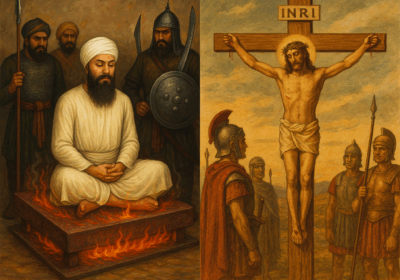
Satpal Singh says that the reason Jesus died for your sins was because humanity was too blind to see a spiritual master. The “collective” put a spiritual master on the cross and killed him like a common criminal. That does not mean everyone who follows that Master gets a free pass to Heaven. That’s too easy like a golden ticket to Heaven. I have to do nothing else. I can do all the sins and confess my sins. That has made it too easy for you. All it has done is to give you a delusion to believe it. If you want a free pass to Heaven, you have to do what Christ said “No one will go to the Kingdom of Heaven except through me”: He said “I have found the Kingdom of Heaven. But if you want to find the Kingdom of Heaven, go through me. Live as I have lived. Do what I do. Become Christ-like.”
Claim 1: Jesus Died Because Humanity Was Spiritually Blind to a “Spiritual Master”
Rebuttal
Christianity does not teach that Jesus died merely because people failed to recognize Him. Scripture is explicit that Christ’s death was for sins, not simply the tragic result of misunderstanding.
The Bible identifies the core human problem as sin and guilt, not ignorance:
“All have sinned and fall short of the glory of God.” (Romans 3:23)
Spiritual blindness explains why many rejected Jesus, but it does not explain why He died. The New Testament consistently teaches that Christ’s death was a deliberate, redemptive act to deal with sin:
“Christ died for our sins according to the Scriptures.” (1 Corinthians 15:3)
If the human problem were merely blindness, then enlightenment or recognition would suffice. Scripture rejects this entirely. The problem is moral guilt before a holy God, which requires forgiveness, not instruction.
Claim 2: The “Collective” Put a Spiritual Master on the Cross Like a Criminal
Rebuttal
While it is historically true that human authorities executed Jesus, Scripture insists that His death was not accidental nor merely sociological.
Jesus Himself stated:
“The Son of Man came… to give His life as a ransom for many.” (Mark 10:45)
And again:
“No one takes My life from Me, but I lay it down of My own accord.” (John 10:18)
Christianity teaches that the cross was not simply humanity’s crime against a teacher, but God’s redemptive act to save sinners:
“The LORD has laid on Him the iniquity of us all.” (Isaiah 53:6)
Reducing the cross to a collective moral failure empties it of its theological meaning and contradicts Jesus’ own stated purpose.
Claim 3: Christ’s Death Does Not Give Believers a “Free Pass” to Heaven
Rebuttal
This claim trades on a false caricature of Christianity.
Christianity does not teach that believers receive permission to sin freely. What it teaches is that forgiveness is a gift, not a wage.
Scripture explicitly rejects salvation by moral effort:
“By grace you have been saved through faith… not of works, lest anyone should boast.” (Ephesians 2:8–9)
Forgiveness is not a “free pass” to sin; it is the removal of guilt that makes transformation possible. Scripture immediately adds:
“We are His workmanship, created in Christ Jesus for good works.” (Ephesians 2:10)
Obedience follows salvation; it does not purchase it.
Claim 4: One Must Become Christ-Like in Order to Enter the Kingdom of Heaven
Rebuttal
This claim reverses the biblical order of salvation.
Christianity teaches acceptance before transformation, not transformation as the condition of acceptance.
Scripture states plainly:
“To the one who does not work but believes… his faith is counted as righteousness.” (Romans 4:5)
Moral transformation is real and expected, but it is the result of being forgiven and reconciled to God, not the means of achieving that reconciliation.
Jesus Himself framed salvation in terms of trust, not imitation as an entry requirement:
“Whoever hears My word and believes Him who sent Me has eternal life.” (John 5:24)
Becoming Christ-like is how a saved person lives, not how an unsaved person earns Heaven.
Claim 5: “No One Comes to the Father Except Through Me” Means Following Christ’s Lifestyle
Rebuttal
This is a misreading of Jesus’ words.
When Jesus said:
“I am the way, the truth, and the life. No one comes to the Father except through Me.” (John 14:6)
He was claiming exclusive access to God through Himself—not prescribing a moral program to qualify for Heaven.
The call to discipleship (“take up your cross and follow Me,” Matthew 16:24) presupposes that a person has already come to God through faith. It describes the life that flows from salvation, not the path that earns it.
The Central Error: Confusing Salvation with Moral Example
Satpal Singh’s framework commits a fundamental category mistake:
• It treats Jesus primarily as a moral exemplar rather than a Savior.
• It turns salvation into self-improvement.
• It makes moral performance the basis of acceptance by God.
This creates an internal contradiction:
• If Jesus died because of ignorance, recognition should save.
• If moral effort saves, the cross becomes unnecessary.
Scripture rejects both conclusions.
What Christianity Actually Teaches
Why Christ Died
• To bear the penalty of sin (1 Corinthians 15:3)
• To satisfy divine justice (Isaiah 53:6; 2 Corinthians 5:21)
• To reconcile sinners to God (Romans 5:10)
What Salvation Is
• Not earned by human effort (Ephesians 2:9)
• Received through faith in Christ (Acts 16:31)
• Proven by transformation, not purchased by works (Ephesians 2:10)
Conclusion
Satpal Singh’s explanation of the cross collapses under biblical and logical scrutiny.
It turns the cross into a social or historical tragedy, replaces God’s act of grace and forgiveness with moral self-effort, and leaves the problem of human guilt before God unresolved.
Christianity proclaims something radically different:
Christ did not come merely to show the way.
He came to save sinners—because He is the way.
“God demonstrates His own love toward us, in that while we were still sinners, Christ died for us.” (Romans 5:8)
Please share this article if you like it!

No Comment! Be the first one.