

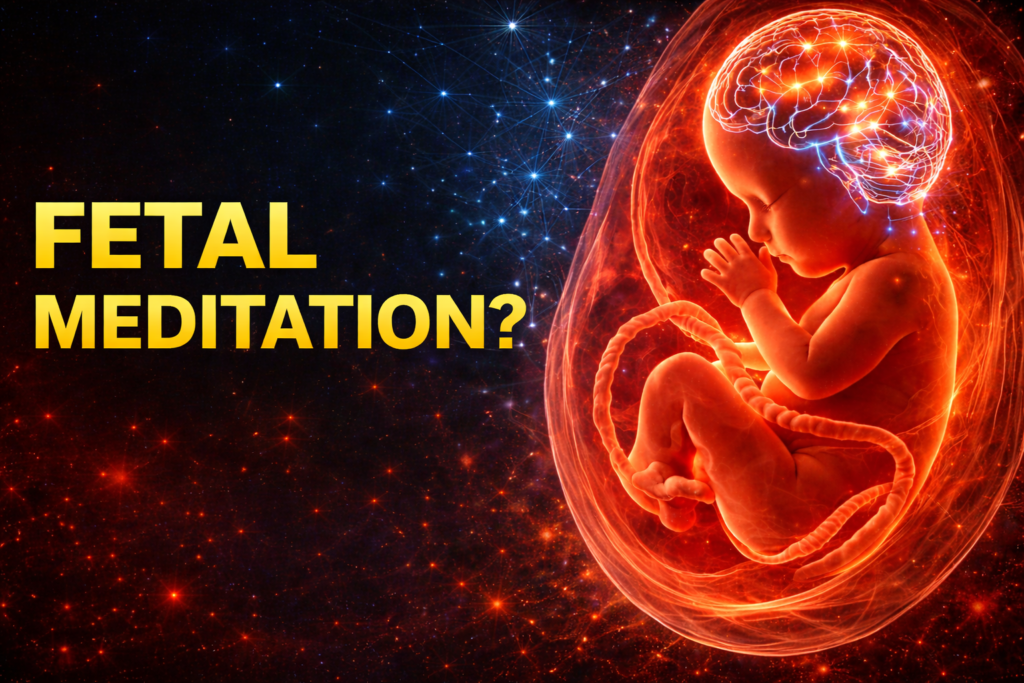
ਰੇ ਨਰ ਗਰਭ ਕੁੰਡਲ ਜਬ ਆਛਤ ਉਰਧ ਧਿਆਨ ਲਿਵ ਲਾਗਾ ॥
Ré nar garabʰ kundal jab aachhat uradh dhiaan liv laagaa.
“O man, when you were coiled in the cradle of the womb, upside-down, you were absorbed in meditation.”
(AG p. 93, Bhagat Beni)
Introduction
This verse presents what appears to be a descriptive claim about human existence in the womb—namely, that the unborn child is engaged in a state of meditative absorption.
The question is straightforward:
Is this a statement of reality, or a pre-scientific religious idea presented as fact?
A careful analysis exposes serious epistemological, scientific, and philosophical problems.
1. Epistemological Failure: Claiming Knowledge Without Access
The verse asserts that the fetus is “absorbed in meditation.”
This raises an immediate problem:
- There is no first-person access (no one remembers being in the womb).
- There is no third-person observation of fetal “meditation.”
- There is no revealed mechanism explaining how this knowledge was obtained.
This is an example of an unfalsifiable assertion—a claim that cannot be tested, verified, or meaningfully accessed.
Put simply:
It claims knowledge where no knowledge is possible.
2. Category Error: Adult Consciousness Imposed on a Fetus
The verse attributes:
- “ਧਿਆਨ” (meditation)
- “ਲਿਵ ਲਾਗਾ” (focused spiritual absorption)
These are advanced cognitive states, requiring:
- self-awareness
- intentional focus
- developed neural structures
- conceptual capacity
A fetus possesses none of these.
This is a classic category error—projecting adult spiritual psychology onto a pre-conscious biological organism.
Put differently:
It confuses mere biological existence with reflective conscious awareness.
3. Scientific Contradiction: What Neuroscience Actually Shows
Modern embryology and neuroscience are clear:
- Conscious awareness depends on cortical development, which occurs late in gestation.
- Even newborns lack stable, reflective consciousness.
- Memory formation requires hippocampal maturity, absent in fetal stages.
Therefore, the idea that a fetus is:
- consciously meditating
- intentionally focused
- spiritually aware
is not just unproven—it is contradicted by established science.
4. Internal Theological Problem
The verse implies:
- humans begin in a state of spiritual awareness
- but lose this awareness after birth
This raises unresolved questions:
- What causes this loss of awareness?
- Why would a divinely ordered system erase such a state?
- Why is spiritual realization later in life so difficult if it was once natural?
This introduces a non sequitur (a logical disconnect) in spiritual anthropology.
Put simply:
The transition from “prenatal awareness” to “postnatal ignorance” is unexplained.
5. Mythological Motif, Not Observed Reality
The idea reflects a broader religious pattern:
- the womb as a state of purity
- birth as a fall into ignorance
Such ideas are:
- poetic constructs, not empirical observations
- symbolic narratives, not biological descriptions
The problem is that the verse is presented as descriptive, not symbolic.
That is where it fails.
6. The Metaphor Escape and Its Consequences
A Sikh might argue: “It’s metaphorical.”
But this creates a dilemma:
- If literal, the claim is scientifically false.
- If metaphorical, then:
- the text gives no clear indication of metaphor
- interpretation becomes subjective
This leads to:
- Eisegesis (reading meaning into the text)
- Hermeneutical subjectivism (the interpreter decides the meaning rather than the text itself)
Put differently:
Either the verse is false, or its meaning becomes subjective—dependent on the interpreter rather than the text itself.
7. Rhetorical Function vs Truth
The verse functions rhetorically to suggest:
- “You were once spiritually pure”
- “You have now fallen into ignorance”
This is a common moral-psychological device:
- create a narrative of lost purity
- induce dissatisfaction
- motivate religious pursuit
But rhetorical effectiveness does not establish truth.
Conclusion
This verse is:
- epistemologically baseless
- scientifically contradicted
- philosophically confused (category error)
- theologically incoherent
- hermeneutically subjective
Put simply:
It is not a statement of reality—it is pre-scientific religious imagination presented as fact.
This is not divine revelation.
At best, it is poetic religious imagination.
At worst, it is a false statement about human reality.

No Comment! Be the first one.